








[ad_1]
I almost skipped Hamburg.
On my first trip to Germany, I was laser-focused on Berlin: the history, the nightlife, the graffiti walls everyone on Instagram was posing against. Hamburg was supposed to be a two-night stopover before I flew home. A box to tick. A place to sleep.
Three days later, I rebooked my flight and stayed a full week.
If you’re planning a trip and wondering about the best things to do in Hamburg, I want to save you the mistake I almost made. Hamburg isn’t a filler city. It’s one of the most quietly spectacular places I’ve visited in Europe, which is a port city with more bridges than Venice, more canals than Amsterdam, and a maritime soul that most travelers fly right over on their way to louder destinations.
This is my honest, first-person Hamburg travel guide, built from three days of getting delightfully lost in Germany’s second-largest city. I’ll walk you through what I actually did, what I’d skip if I went back, and the Hamburg hidden gems that barely make it into most guidebooks.

Why Hamburg Gets Overlooked (And Why That’s Good News for You)
Let’s be honest: when people picture Germany, they picture Berlin, Munich’s Oktoberfest, or a fairy-tale village in Bavaria. Hamburg rarely makes the shortlist, even though it’s the second-largest city in the country and one of the richest port cities in the world.
Part of that is image. Hamburg doesn’t market itself the way Berlin does. There are no giant Cold War landmarks, no world-famous nightclubs like Berghain dominating the travel press. What Hamburg has instead is harder to put on a postcard: a working harbor that’s been operating for over 800 years, a red-brick warehouse district that’s now a UNESCO World Heritage Site, and a relationship with water that shapes everything, the food, the architecture, the rhythm of daily life.
For travelers, the overlooked status is a gift. You’ll get world-class museums, a booming restaurant scene, and a walkable old town without the Berlin crowds or the Munich price tags. If you visit Hamburg in shoulder season (April, May, September, October), you’ll practically have parts of the city to yourself.
Getting to Hamburg and Getting Around
Hamburg Airport is about 20 minutes from the city center by S-Bahn (the S1 line runs directly to the main train station). A single ticket costs around €3.60 as of my visit, and you buy it from machines on the platform.
If you’re coming from elsewhere in Germany or Europe, the Hauptbahnhof (Hamburg’s main train station) is a hub for high-speed ICE trains. I came in from Berlin. The train ride is about 1 hour and 45 minutes, and honestly, it’s more comfortable than flying.
Once you’re in the city, you won’t need a car. Hamburg is built for walking and public transit. The HVV system covers U-Bahn, S-Bahn, buses, and even some ferries on the Elbe River. A day pass was around €8.30 when I went, and paid for itself by mid-morning. If you’re staying more than two days, look into the Hamburg Card, which bundles transit with discounts on a lot of the museums and attractions I’ll mention below.
Where to Stay in Hamburg
For a first visit, I’d stay somewhere between the old town and the harbor. I based myself near the Speicherstadt district, which meant I could walk to most of what I wanted to see on Day 1 without taking public transit.
Other solid neighborhoods: St. Georg (lively, near the main station, a bit rough-around-the-edges but very central), St. Pauli (the famous nightlife district, which is fun if you want to be in the middle of it, loud if you don’t), and Altona (quieter, more residential, great cafés).
I’d avoid anywhere too far out. Hamburg sprawls, and a 20-minute U-Bahn ride back to your hotel at midnight after a long day is a buzzkill.

Day 1: The Harbor, the Speicherstadt, and the Soul of the City
Morning: Start at the Fish Market
This is the rule: your first morning in Hamburg, you wake up early and go to the fish market.
The Fischmarkt (fish market) at Altona is not a tourist trap, even though plenty of tourists go. It’s been running every Sunday morning since 1703, starting at 5:00 AM in summer (7:00 AM in winter) and shutting down at 9:30 AM sharp. Locals come for fresh fish, produce, flowers, and, weirdly, eels in sandwiches the size of your face. The market hall next door has a live band playing old sailor songs while hungover twenty-somethings from nearby St. Pauli stumble in for breakfast beer.
I’d budget 90 minutes here. Eat a fischbrötchen (fish sandwich). Drink a coffee. Watch the fishmongers yell in Plattdeutsch (the local dialect) and toss whole pineapples into crowds like it’s a baseball game. It’s the most Hamburg thing Hamburg does.
If you’re not in town on a Sunday, don’t worry, I’ve got alternatives below.
Late Morning: Walk the Landungsbrücken
From the fish market, walk east along the Elbe River toward the Landungsbrücken, the floating piers that form Hamburg’s main harbor promenade. This is the waterfront postcard shot: old ships, new ferries, the skeletal cranes of the container port in the distance.
Stop at the Rickmer Rickmers, a permanently docked 19th-century tall ship that’s now a museum. Admission was around €6, and it’s worth an hour if you like maritime history. Or just sit on the promenade with a coffee and watch the harbor traffic.
Afternoon: Take a Harbor Cruise
You cannot come to Hamburg and skip a harbor cruise. I know, I know, the word “cruise” sounds touristy. Do it anyway.
Hamburg’s harbor is the third-largest port in Europe, and seeing it from the water is the only way to understand the scale of this city’s relationship with the sea. The classic one-hour boat tours depart every 30 minutes from the Landungsbrücken and cost around €22. You’ll pass container ships taller than apartment buildings, the historic Old Elbe Tunnel (more on that in a second), and the shipyards where Hamburg’s wealth was built.
For something different, take one of the HVV ferries; they’re part of the regular public transit system, so your day pass covers them. Ferry 62 to Finkenwerder is essentially a free harbor cruise if you’re already holding a transit ticket. This is one of the best hidden gems in Hamburg. I wish someone had told me about it before I paid for the tourist version.

Walk the Old Elbe Tunnel
Before you leave the Landungsbrücken area, walk (or ride the old wooden elevator) down into the Old Elbe Tunnel. Built in 1911, it runs under the Elbe River to the Steinwerder side of the harbor and was an engineering marvel when it opened. It’s free, it’s weird, and the acoustics inside are incredible. Street musicians sometimes play down there just for the echo.
The view from the Steinwerder side, back toward the Hamburg skyline, is the angle you’ve seen in every photo of the city, but probably didn’t know it was taken from there.
Late Afternoon: Explore the Speicherstadt District
Walk east (about 15 minutes) from the Landungsbrücken, and you’ll hit the Speicherstadt district, the largest warehouse complex in the world still in active use, and a UNESCO World Heritage Site since 2015.
The red-brick warehouses rise straight out of the canals, connected by tiny pedestrian bridges. In late afternoon light, it’s ridiculous how good this neighborhood looks. Photographers love it for a reason.
Don’t just walk through; duck into a few of the museums built into the old warehouse buildings. The Speicherstadtmuseum (inside an actual working warehouse) explains how the district functioned historically, with coffee sacks, spice barrels, and tea chests still stacked as if the workers had just stepped out. Small, cheap, and fascinating.
If you’re traveling with kids, or, honestly, if you’re not, Miniatur Wunderland is also here. I almost skipped it because “world’s largest model railway” sounded like a letdown. It’s one of the most-visited attractions in Germany, and it fully deserves the hype. The detail is absurd. I spent three hours there and didn’t see half of it.
Evening: Dinner in the HafenCity
Adjacent to the Speicherstadt is HafenCity, one of the largest urban redevelopment projects in Europe, built on former dockland. A lot of architecture critics have strong opinions about it. As a traveler, I thought it was a great neighborhood to wander through at dusk: modern glass buildings, public art, waterfront restaurants, and fewer tourists than you’d expect.
The Elbphilharmonie concert hall anchors the district. We’ll come back to it tomorrow, but even if you don’t have concert tickets, the viewing plaza (called the Plaza) is open to the public and free to enter. You just need to grab a timed ticket from the machine on the ground floor. The views of the harbor at sunset from 37 meters up are worth the elevator ride alone.
For dinner, I’d pick somewhere with a view. Carls Brasserie, next to the Elbphilharmonie, does classic North German seafood. Or head back into the city for something less touristy, Altes Mädchen in the Schanzenviertel is a brewpub with great food and a killer beer list.
Day 2: Neighborhoods, Markets, and the Real Hamburg
Day 1 was the hits. Day 2 is when you start to understand Hamburg.
Morning: Coffee and the Altstadt
Start with a slow morning in the Altstadt (old town). Hamburg’s Rathaus (city hall) is one of the most ornate town halls in Germany, with 647 rooms, which is more than Buckingham Palace, a fact local guides will tell you at least three times. Tours are €5 and run in German and English.
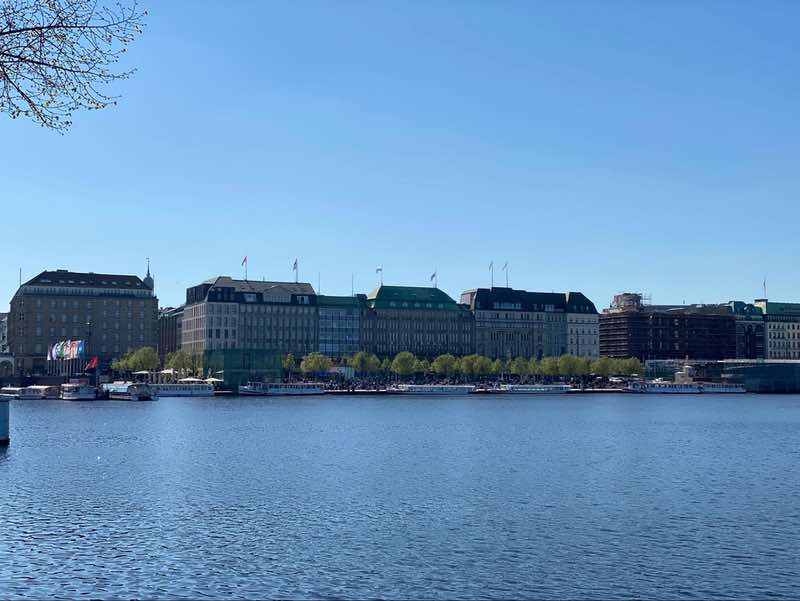
The Alster lakes border the Altstadt to the north. The Binnenalster (inner lake) is the postcard version, with a fountain in the middle, rowboats, and people eating ice cream on the promenade. The Aussenalster (outer lake) is bigger, quieter, and lined with sailboat clubs, running paths, and the mansions of Hamburg’s old shipping money.
Rent a kayak or a small sailboat if the weather’s good. Segel-Schule Pieper offers hourly rentals from around €20, and paddling the Alster is one of the most relaxing things I’ve done in the city.
Late Morning: St. Pauli and the Reeperbahn
Now for the opposite vibe: head west to St. Pauli, the famously rowdy neighborhood that’s home to the Reeperbahn, Hamburg’s red-light district, and one of Europe’s most legendary nightlife strips.
During the day, the Reeperbahn is mostly quiet, which is the best time to see it. You can walk the street, poke into the little shops, and get a sense of the neighborhood’s history without the late-night chaos. The Beatles famously played their first residencies here in the early 1960s, and there’s a small plaza called Beatles-Platz at one end of the Reeperbahn with stainless-steel silhouettes of the band.
St. Pauli is also home to Hamburg’s scrappy underdog football club, FC St. Pauli, whose skull-and-crossbones logo you’ll see everywhere. If you can catch a match at Millerntor Stadium, do it. It’s one of the most distinctive atmospheres in European football.
Lunch: Schanzenviertel
From St. Pauli, walk north into the Schanzenviertel (locals just call it “Die Schanze”). This is the creative, slightly gritty neighborhood that would be gentrified in any other city, but somehow holds onto its edge here. Street art, vintage shops, Vietnamese sandwiches, natural wine bars, and some of the best coffee in Hamburg.

Grab lunch at Bullerei (a stylish converted livestock hall) or a cheap falafel at one of the Middle Eastern spots on Susannenstrasse. Either way, you won’t regret it.
Afternoon: Kunsthalle and the Deichtorhallen
Hamburg has a serious museum scene that gets overshadowed by Berlin’s. Two worth your time:
Kunsthalle Hamburg is the city’s flagship art museum, with a collection spanning seven centuries, medieval altarpieces, Caspar David Friedrich’s romantic landscapes (including the famous Wanderer Above the Sea of Fog, which lives here), and a strong contemporary wing. Give it at least two hours. Admission was €16.
Deichtorhallen is a pair of converted market halls now used for large-scale contemporary art and photography exhibitions. The curation tends to be excellent. If you only have time for one, check what’s showing and decide.
Late Afternoon: The Maritime Museum
If harbors, ships, and naval history do anything for you, Hamburg’s International Maritime Museum is one of the best in the world, with ten floors of model ships, nautical instruments, and shipping history housed inside a converted Speicherstadt warehouse. If that’s not your thing, skip it without guilt.
Evening: Dinner and the Reeperbahn at Night
Come back to St. Pauli for dinner and see the Reeperbahn in its natural state. It gets rowdy, loud, and a little seedy after dark, not in a dangerous way, more in a “this is where sailors have been drinking for 400 years” way.
For dinner, try Clouds (a rooftop with the best skyline view in the city) or go for something more local, like Oberhafen-Kantine, a tilted old canteen near the harbor that once fed port workers.
End the night at a live music club. Mojo Club and Molotow both book great acts. Or, if you want something completely Hamburg, find one of the bars on Hamburger Berg (a smaller, less touristy street parallel to the Reeperbahn) and see where the night takes you.

Day 3: Green Hamburg, Hidden Gems, and Slowing Down
Most visitors give Hamburg two days. Day 3 is what separates the travelers from the tourists.
Morning: Planten un Blomen
Hamburg is a surprisingly green city. About 14% of the land inside the city limits is parks, and Planten un Blomen is the crown jewel. It’s a massive botanical garden right near the city center with themed gardens (Japanese, tropical, rose), free water-light shows in summer, and one of the largest Japanese gardens in Europe.
Go early. Bring coffee. Sit on a bench and watch Hamburg’s dog walkers and runners make their morning rounds. This is what locals love most about their city.
Late Morning: Blankenese
For a half-day trip that feels like leaving Hamburg without actually leaving, take the S-Bahn (line S1) about 25 minutes west to Blankenese. This is Hamburg’s fairy-tale neighborhood, a hillside village of white-painted cottages, impossibly narrow staircases, and dramatic Elbe river views.
Walk the Treppenviertel (“staircase quarter”), over 5,000 steps wind up and down the hillside, connecting houses that couldn’t be reached by car. When you hit the top, the views back over the river and toward the opposite bank are some of the best in the city.
Have lunch at one of the cafés near the Strandweg (beach path). Sago Tempeh Reis at the top of the hill or a simple fischbrötchen by the water will both do the job.
Afternoon: The Hamburg Dungeon (If You’re Into It)
Back in the city center, the Hamburg Dungeon is a very touristy, slightly corny horror-comedy attraction that takes you through Hamburg’s darker history, including the plague years, executions, and the great fire of 1842. It’s theatrical, occasionally funny, and mostly for families. If that’s you, you’ll have a blast. If it’s not, skip it without guilt.

Late Afternoon: Elbphilharmonie Concert
This is the splurge, if you can pull it off. The Elbphilharmonie concert hall is one of the architectural wonders of the 21st century, a glass crystal balanced atop a brick warehouse, with a concert hall inside that sounds, by every account, extraordinary. Concert tickets sell out weeks in advance, so plan ahead.
If the tickets don’t work out, just go back up to the public Plaza at sunset. Different view from tomorrow, but equally stunning.
Evening: A Quiet Dinner
For your last night in Hamburg, skip the big-name restaurants. Ask your hotel for a low-key neighborhood spot in Eimsbüttel or Ottensen. These are residential neighborhoods where the Hamburg I fell in love with actually lives, no tour buses, no selfie sticks, just good food and people who live here.
Hamburg Hidden Gems Most Visitors Miss
A few places I stumbled into that didn’t make the front page of any guide:
- The Elbtunnel pedestrian crossing at night – same Old Elbe Tunnel from Day 1, but go after dark. Almost empty. Acoustics like a cathedral.
- Dialoghaus – a museum where all the guides are visually impaired, and you tour in complete darkness. Genuinely transformative.
- The Beatles walking tour in St. Pauli – not at the plaza, but the actual clubs where they played. Most are still standing.
- Schanzenpark on a Sunday afternoon – the whole neighborhood shows up. Blankets, beers, guitar players. Free, local, real.
- Alster Sunday rowing – rent a rowboat instead of a kayak and you’ll feel like a character in a German novel from 1912.
- The old subway viaducts near Baumwall – under-photographed and dramatic at dusk.
- Boilerman Bar inside the 25hours Hotel – among the best cocktail bars in the city, hidden in plain sight.
When to Visit Hamburg
Hamburg has a reputation for rain. That reputation is earned. But it’s not constant, the city is beautiful in any season, and the weather changes fast enough that you can usually get around a shower by ducking into a café.
- Spring (April–June) – my favorite. Long days, flowers everywhere at Planten un Blomen, tourist crowds still manageable.
- Summer (July–August) – warm, festive, lots of outdoor events. Can get humid; Hamburg is flat and close to sea level.
- Fall (September–October) – shoulder season, great light, fewer crowds. Bring layers.
- Winter (November–March) – dark and damp, but the Christmas markets in the Altstadt and the Historischer Weihnachtsmarkt near the Rathaus are some of the best in Germany.

Practical Tips for Visiting Hamburg
A few things I wish I’d known before I landed:
Language. Most Germans in Hamburg speak excellent English, especially in restaurants, hotels, and museums. Learn “Danke” and “Bitte,” and you’ll be fine.
Cash. Germany still loves cash more than most Western European countries. Some small restaurants, bakeries, and bars are card-free. Keep €50–100 on you.
Tipping. Round up or add 5–10% at restaurants. Tell the server the total when they bring the card machine (they add the tip at payment, you don’t leave it on the table).
Getting online. Free Wi-Fi in cafés is common, but not always reliable, and Germany’s public Wi-Fi network is patchier than you’d expect for a wealthy country. If you’re planning to use maps, rideshare apps, and translation tools, and you will, the cleanest solution is arriving with data already set up.
I used a pre-activated German eSIM from Roambit. It installs before you leave home, activates the moment your plane lands, and gives you unlimited data on the local German networks for a flat rate. No SIM swapping at the airport, no roaming charges, no hunting for free Wi-Fi. Worth the small cost for peace of mind, especially if you’re relying on Google Maps to navigate the Speicherstadt canals or translating menus in Schanzenviertel.
Safety. Hamburg is one of the safest major cities in Europe. Standard travel precautions apply around the Reeperbahn late at night, it’s not dangerous, just chaotic.
Walking. Wear good shoes. The cobblestones in the Altstadt and the stairs in Blankenese will punish anything less.
Hamburg vs Berlin: Which Should You Visit?
I get this question a lot from friends planning their first trip to Germany.
Berlin is bigger, louder, and more internationally famous. If you want nightlife, political history, and a city that feels like it’s permanently under construction, Berlin is the choice.
Hamburg is smaller, wealthier, and more quietly confident. If you want a maritime city with world-class museums, great food, and the feeling of discovering something most travelers miss, Hamburg is the choice.
My honest answer: do both. They’re less than two hours apart by train. Give Berlin four days and Hamburg three. You’ll come back understanding Germany better than most people who’ve visited Munich for a week.

Is Hamburg Worth Visiting?
Yes. Unreservedly.
Hamburg is the kind of city that rewards travelers who show up without expectations. It doesn’t perform for you the way Berlin or Paris or Barcelona does. It just lives, busily, quietly, nautically, and lets you decide how much attention to pay.
Pay a lot.
If you were wondering what to do in Hamburg or whether a weekend in Hamburg was worth carving out of a bigger European trip, I hope this has answered that. Three days are enough to fall for this city. A week and you’ll start planning your return.
I already am.
[ad_2]
Source link